
Nailing
Fasteners sit loose enough for vinyl to expand and contract.
Adding a room, a garage or a new house? Get siding installed over proper wrap and flashing so it keeps water out from day one.
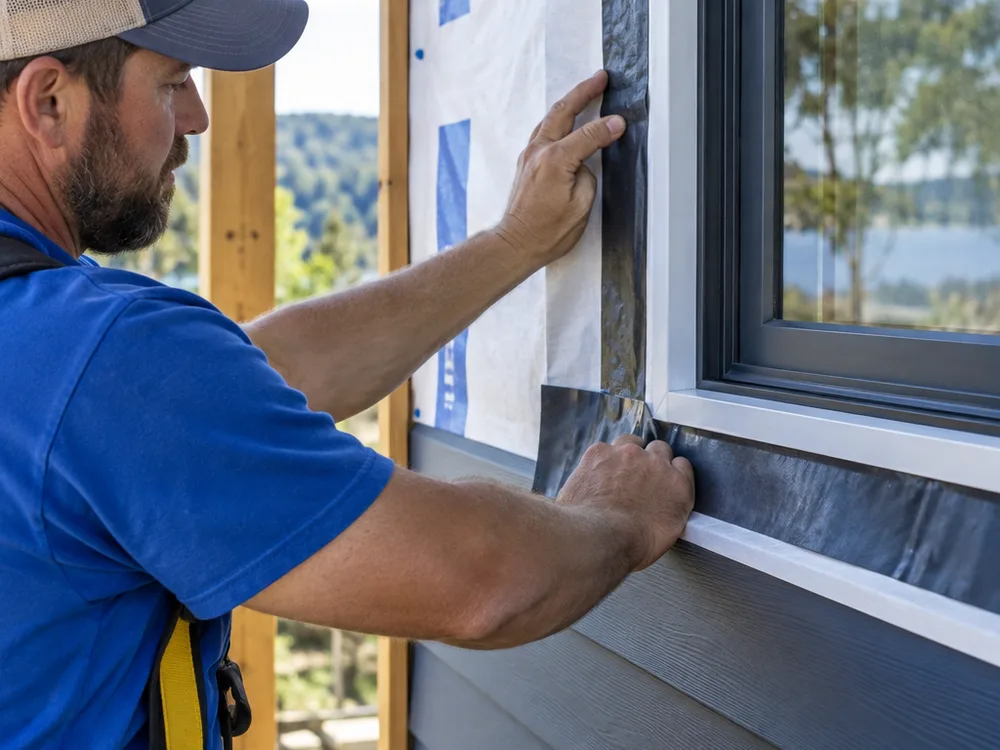
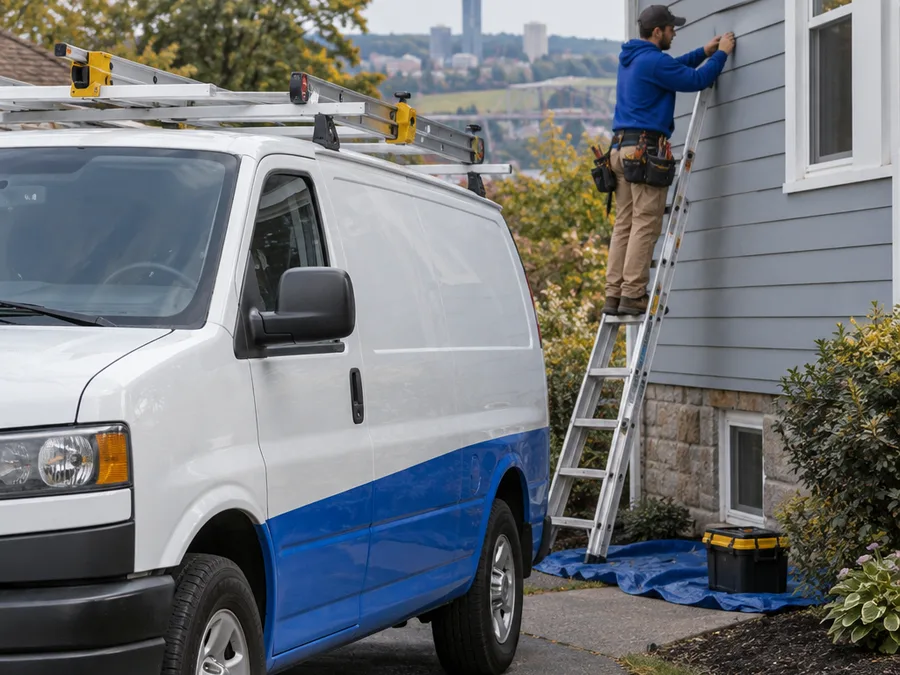
Siding is only as good as what's under it. On new walls we start with housewrap, tape and flash every window and door, and set starter strip and corner posts straight so every course lines up.
On additions, the goal is for the new wall to look like it was always there, so we match the profile, reveal and color as closely as the product allows.
Have a bigger project in mind? Talk to our siding contractors in Pittsburgh about the whole house.
The order matters. Each step protects the one before it.
Sheathing is checked for flat, tight seams, since every dip shows through the finished siding.
Housewrap is lapped top over bottom so water always runs outward.
Windows and doors get sill pans and taped flashing before any trim.
Starter strip and corner posts go on level and plumb, so every course follows.
Panels, then window trim, soffit and fascia, finished with a look at every wall together.
On a new house, siding is usually one of the last outside trades. The best time to plan it is before windows go in, so window flashing and siding trim are designed together instead of patched together.
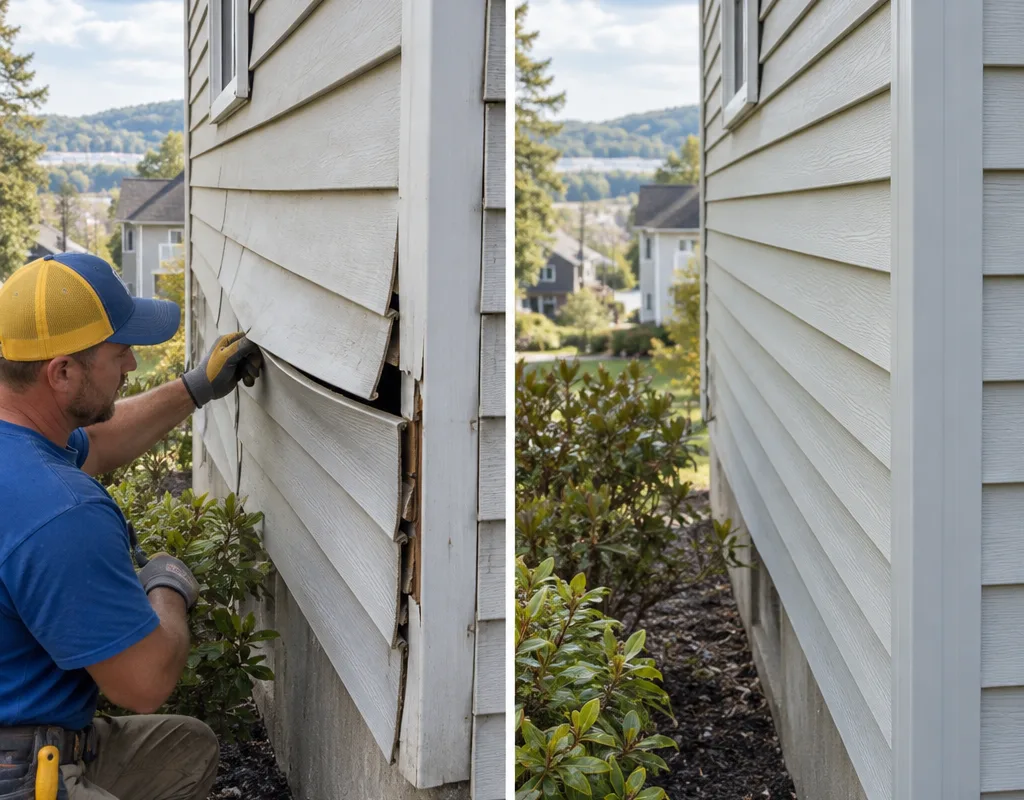
The hard part is the joint between old and new. Profiles change over the years, and older siding has faded, so we bring samples to compare against the existing wall in daylight. Where a perfect match isn't possible, a corner or a trim break is a cleaner place for the change than the middle of a wall.
Fasteners sit loose enough for vinyl to expand and contract.
Gaps above grade, decks and roof lines keep panels dry.
Windows and doors are flashed before trim goes on.
Clean joins where new siding meets old walls.
A full vinyl re-side on a Pittsburgh house typically runs about $5,750 to $13,050. Additions and garages cost less because there's less wall, but trim and tie-ins add time. Ranges like these are for budgeting only; your quote depends on the house.
Wall height, the number of windows and doors, and how much trim the design calls for are what move the price on a new install. Steep lots also need more staging, which adds labor.
On a new wall you aren't limited by what's already there, so it's worth choosing with the whole house in mind:
For an addition, the existing house usually decides it. Matching what's there almost always looks better than a contrasting material, unless the change is planned as a deliberate accent, like board-and-batten on a gable.
Building an addition? Call to get the siding planned early.
Call (412) 830-0567Often closely, if the profile is still made. If not, we'll suggest a style that blends.
After windows and doors are set and the wall is wrapped, so the flashing can be done right.
Vinyl can, with care. Cold panels are stiffer, so spacing for expansion matters even more.
Inside the city, the Department of Permits, Licenses, and Inspections handles permits, and new construction or additions are usually already under a building permit.
Call while the walls are going up, and we'll fit the siding into your schedule.